
Unsupported Browser Detected

Internet Explorer is not fully compatible with the features of this website. For the best possible experience, please switch to Chrome or Firefox. Click each to download if needed.

You are: individual

I’m an individual or investor looking to take action to help secure my financial future.

I want to tackle the retirement and protection needs of individuals.

I want to learn more about your employer plan solutions and technology.

I want to log in to my account or learn more about retirement planning and enrolling.

Hello

This website is intended for financial professional use only. Please confirm that you are a financial professional.

Insights & Education

Living and funding longer lives

October 2025 | 9 min read

Helping Americans create a strong financial foundation for fully lived longer lives


Americans are living longer. And while that's great news, it’s important to understand how longevity changes the way we prepare for, transition to and live in retirement. To better understand how well people understand longevity risk and opportunity, Corebridge Financial and the Longevity Project conducted research to explore how Americans ages 18+ feel about their potential to live to 100 and their ability to plan for longevity.1

Overview: 

In our latest study, we find that Americans express guarded optimism about their longevity — and they have very real concerns about how later life will be lived, pointing to health, financial and quality of life worries. Our study on living and funding longer lives provides direction on the steps that can be taken to help individuals address common concerns, achieve their goals, and fully live and fund their longer lives.

Findings at-a-glance:

  • Half of Americans (50%) believe they could reach age 100, with Gen Z and millennials the most positive of the generations, at 57% and 49%, respectively. Family longevity plays the biggest role in longevity optimism — those with family members age 95+ are the most likely to feel they could reach age 100.
  • There is a clear disconnect, however, between longevity expectation and retirement planning — half of non-retired respondents are only planning for 20 years or less in retirement, even though the majority don’t plan to work beyond their sixties, and many expect to retire before age 65.  
  • Physical well-being, healthcare costs and financial security are top longevity concerns, emphasizing the crucial interplay of health and wealth in retirement.
  • Americans report high levels of stress generally, but particularly around financial security. Many hope to take action in the next year to reduce their financial stress.
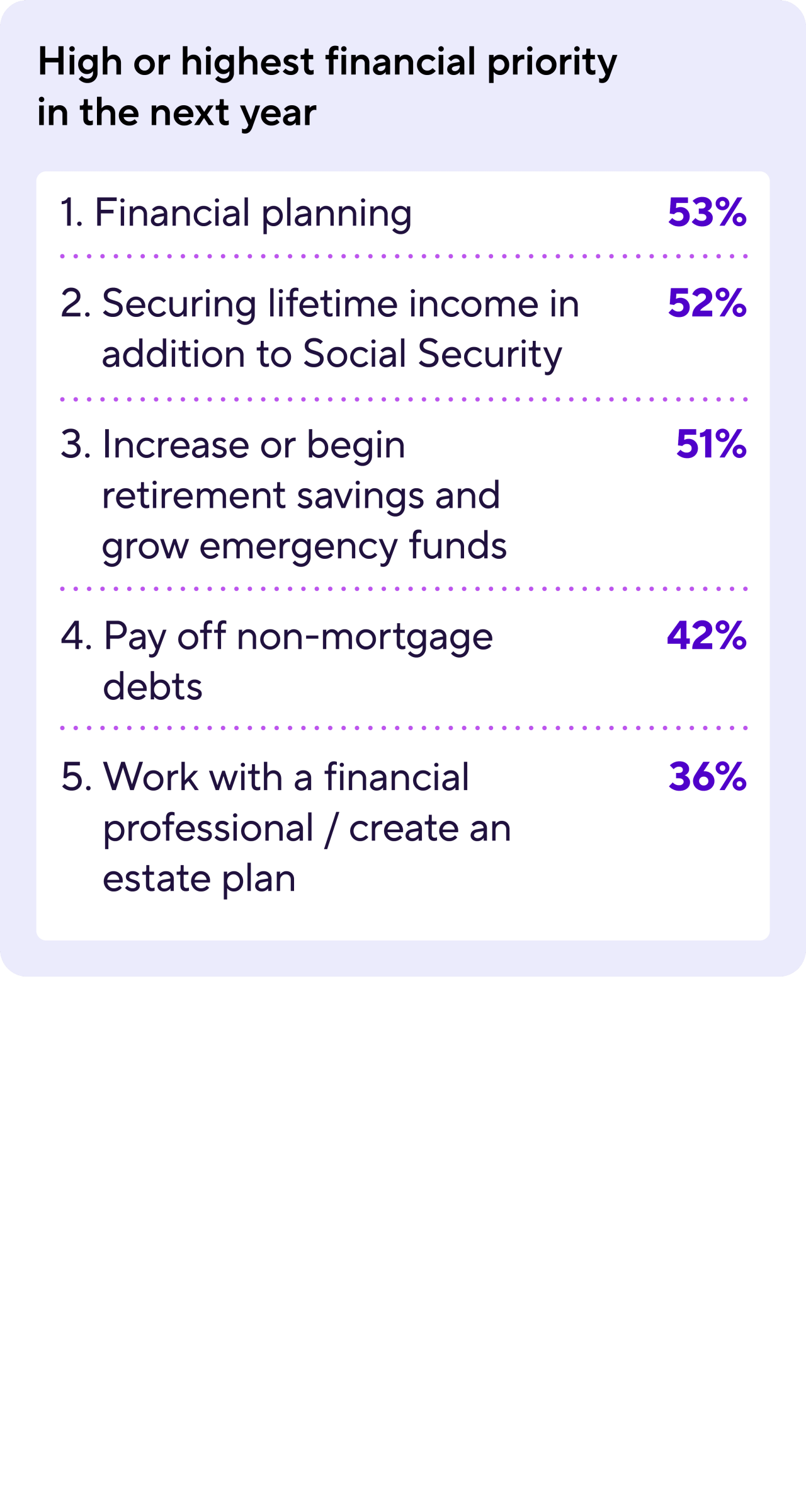
  • Securing lifetime income in addition to Social Security is a high priority — and can even impact current levels of happiness and well-being. 
     

The 100-year paradox: We want to live longer…maybe

There is an understanding among the general population that people are living longer, with 50% of Americans believing it's possible they could live to see age 100. This belief is even higher among younger respondents — 54% of Americans ages 18-34 say it's possible, compared to only 45% of those age 50-64. Surprisingly, men are more likely than women to believe in their own longevity, even though women outlive men by 5.3 years.2

Notably, family longevity plays a role in longevity optimism — 67% of people who have centenarian family members feels it's possible they could achieve a 100-year life.
Do you think it's possible you could live to 100?

The top three reasons for longevity optimism among those surveyed are:

1. Ongoing advances in healthcare and medicine

2. My current health and lifestyle are good

3. Improved access to tools and resources for living a longer life

There are clear benefits to living longer – and valid concerns

Interestingly, fewer Americans want to live to 100 than believe it’s possible that they could, at 49% to 50%. There is a also generational divide — Gen Z is most interested in living to 100, at 55%, while only 44% of baby boomers say the same, likely reflecting their more immediate concerns about aging (further reinforced by only 42% of retirees wanting to be centenarians). The perception of one's own longevity is likely not static and can change over time, which underscores the need for intentional, goal-oriented planning that emphasizes its benefits and mitigates longevity risk. 

Where all generations agree are on the top benefits of longevity: spending more time with loved ones and fully experiencing their longer lives by exploring, having new experiences, and witnessing discoveries.

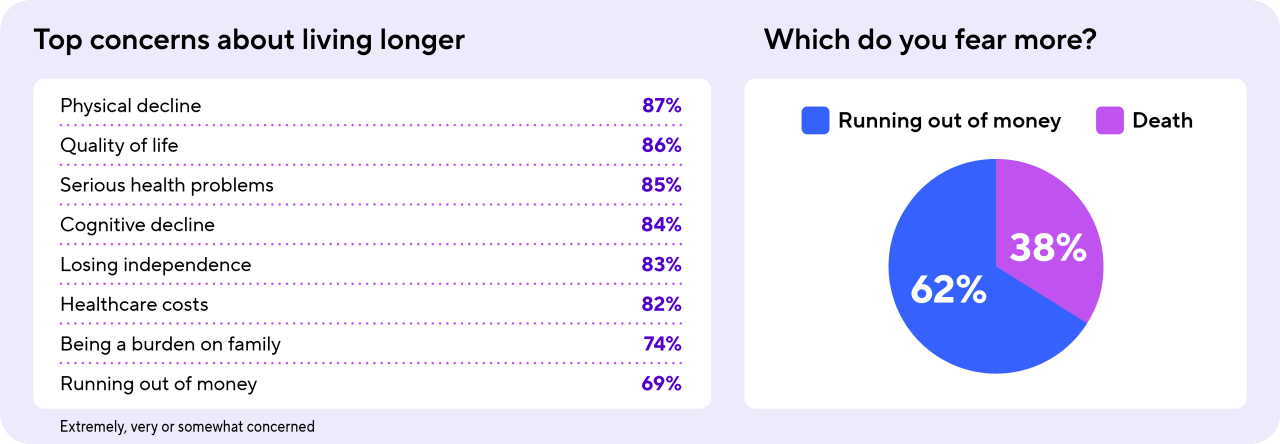
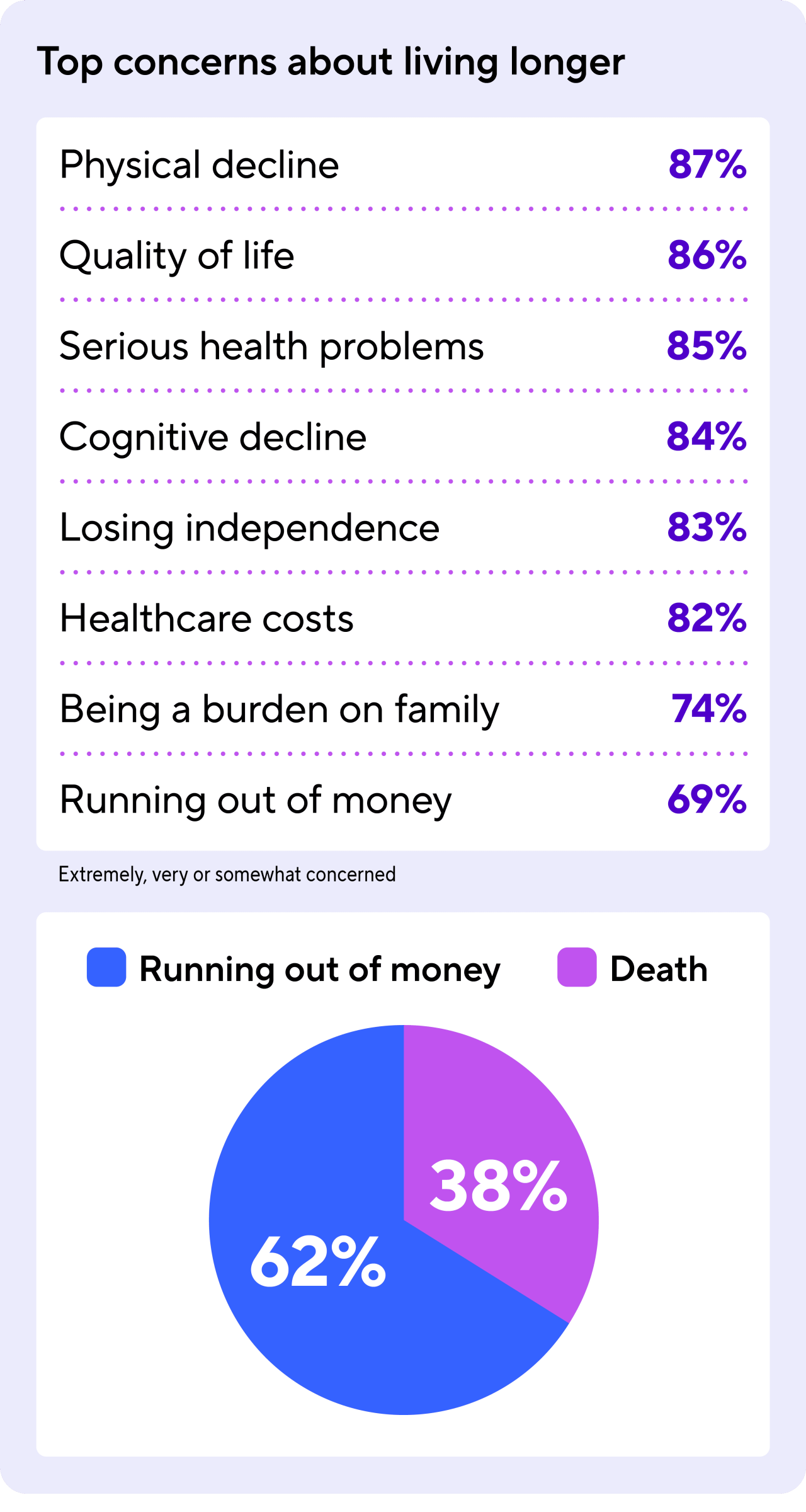
Longevity does bring heightened concerns about financial and physical well-being, including health and healthcare costs and the possibility of running out of money. 

Non-retired Americans may be underestimating their years in retirement

While not a hypothetical concept, living to age 100 (or generally living a very long life) may fall into a “theoretical possibility” for many people, excluding perhaps those with a history of family longevity. A more tangible reality for people is that they will work, and they will retire — ideally, with a level of financial security that supports their lifestyle for as long as they live.

This is why it is important to highlight the significant disconnect between the fact that while many working adults believe in their potential to live to age 100, they are not carrying that possibility over to their retirement planning assumptions, including their expected age at retirement and how many years they will spend in retirement.

  • 51% of non-retired Americans believe they could live to 100.
  • 80% expect to retire by age 69, including 39% of Americans who plan to retire by age 64. 
  • Yet fully half, 50%, are only planning for 20 years or less in retirement. 

This indicates a clear need to make sure a longevity lens is applied to retirement planning, ensuring all possibilities are considered. 

Retirement doesn’t always happen as planned

Helping people understand longevity risk can drive better and earlier planning and help bridge the retirement expectations gap. This is especially crucial for Gen Z and millennials, who have the highest expectations of both retiring before age 65 and for living to age 100.

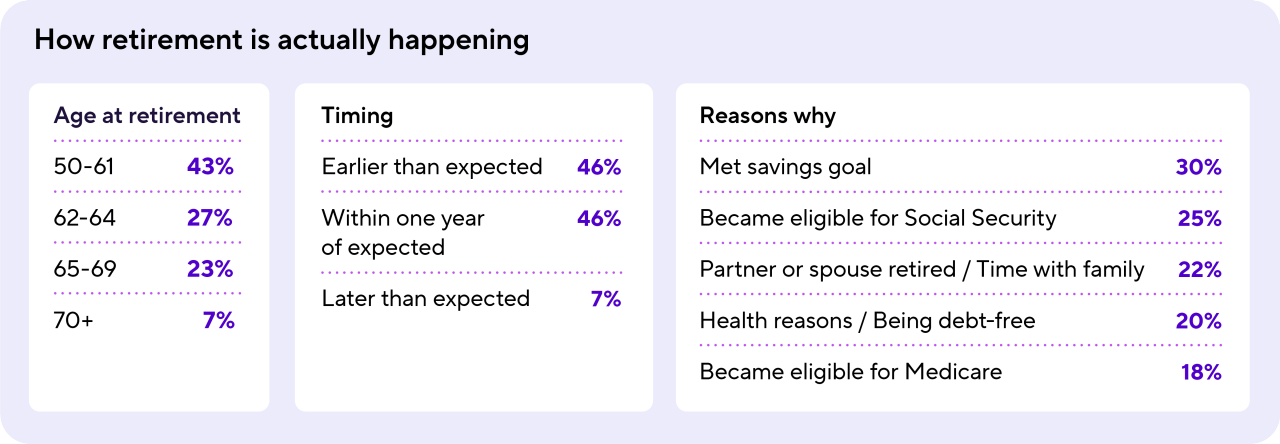
Intention, however, often doesn't align with timing — almost half of retirees surveyed retired earlier than planned. One-quarter cited Social Security eligibility as their reason for retiring. Given 70% retired at age 64 or younger, this suggests many are not waiting to receive their full benefit amount. This may be of particular concern when only 30% retired based on hitting their retirement savings goals.  

The health-wealth interplay in retirement

Healthcare spending increases as we age, due to higher incidences of chronic conditions, greater utilization of healthcare services, and a need for more specialized care, including long-term care. In the United States, our highest healthcare costs occur after age 65 and are one of the few living expenses that continue to increase over time in retirement.3

Personal health worries, rising healthcare costs, and overall financial well-being consistently rank in our surveys as top longevity concerns. We asked respondents what actions they would take if they knew they would live to 100 — at the top of the list are taking better care of physical health, focusing on activities to manage cognitive health, and saving more. The strong correlation between health and financial concerns underscores the critical importance of integrating both aspects in comprehensive retirement planning.

Actions I'd take now if I knew I'd live to 100

1. Take better care of my physical health

2. Focus on activities to manage my cognitive health

3. Start saving more
 

Addressing financial priorities — and top stressors

Stress has a way of impeding clarity and keeping people from taking action that can move them forward. Identifying and addressing top stressors is a core component of planning for financial success. Americans are feeling financially stressed on a number of fronts — from the high cost of living (69%), to not saving enough for retirement (57%), to not having enough emergency savings (54%). 

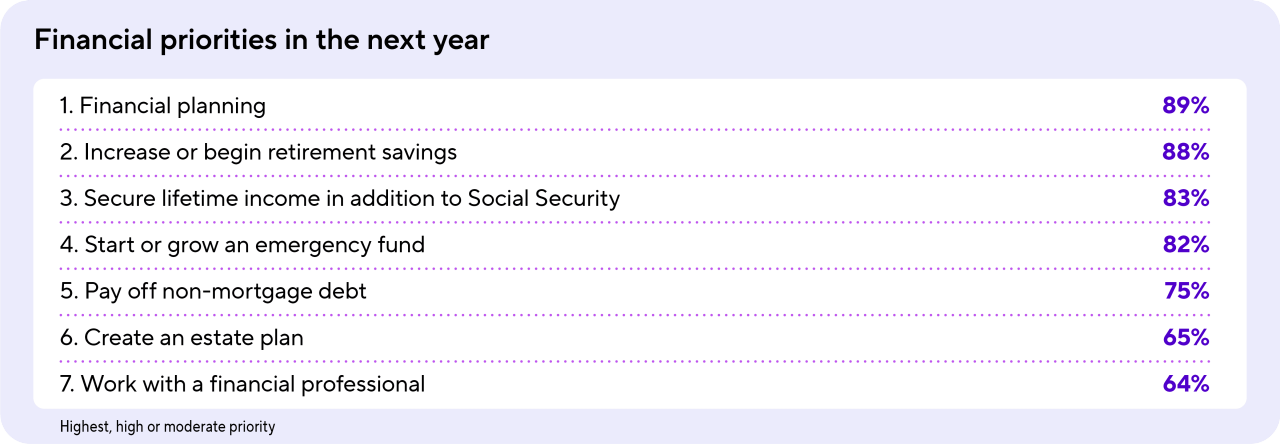
The good news is that many people report a desire to take action around their finances in the next 12 months in key areas that will move their financial futures forward and help set them up for greater retirement security.

The importance of professional guidance and lifetime income

No one should go it alone when planning for a successful financial future, which begins with understanding goals and financial priorities and how to make them a reality. Putting together a strategy with the guidance of a financial professional can help people at all levels of planning and life stages — and it can help improve financial confidence.

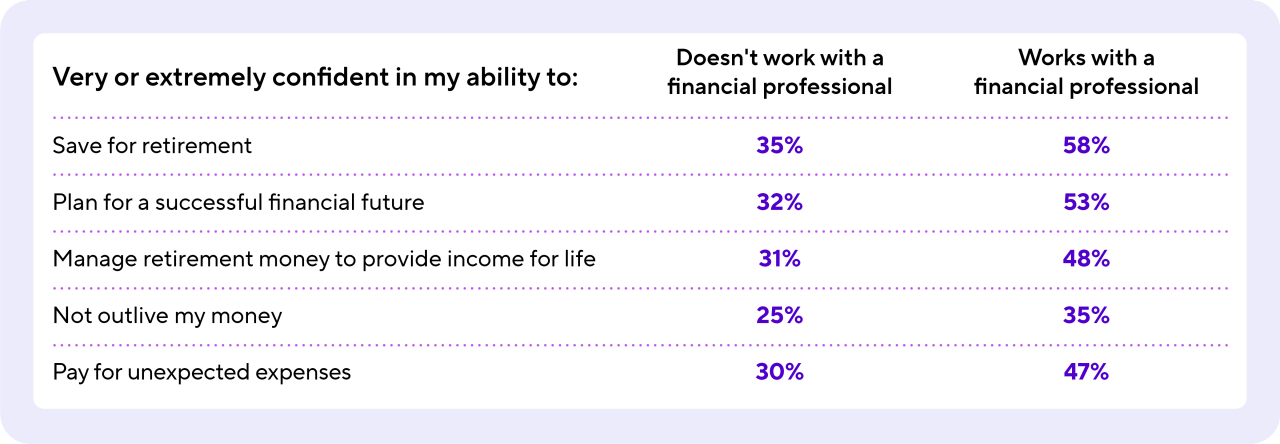
In fact, those who work with a financial professional report higher confidence in their own financial abilities. While there may not be a direct causal relationship, it could suggest that seeking trusted guidance, improving financial literacy and broadening personal understanding of how retirement products work can improve confidence and lead to positive action and better outcomes.

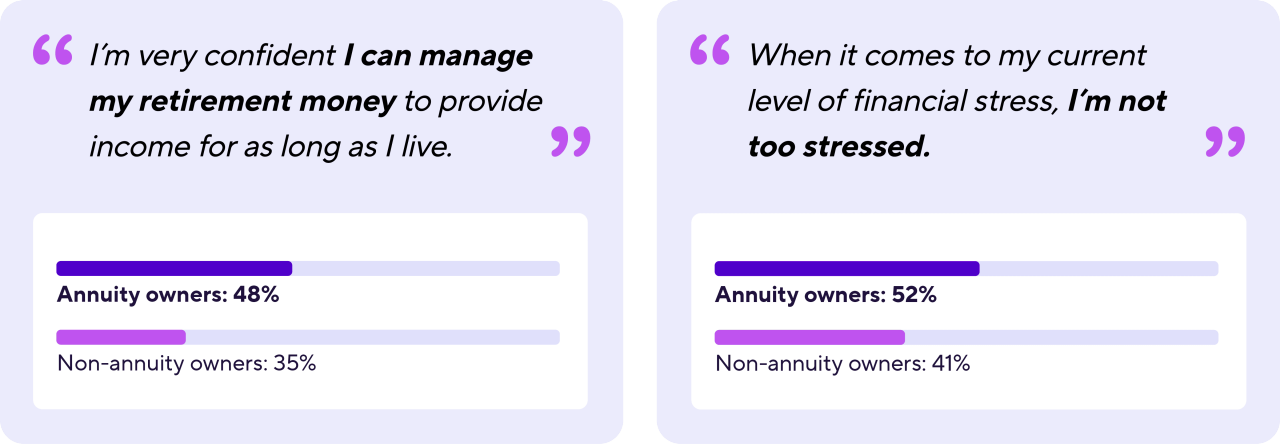
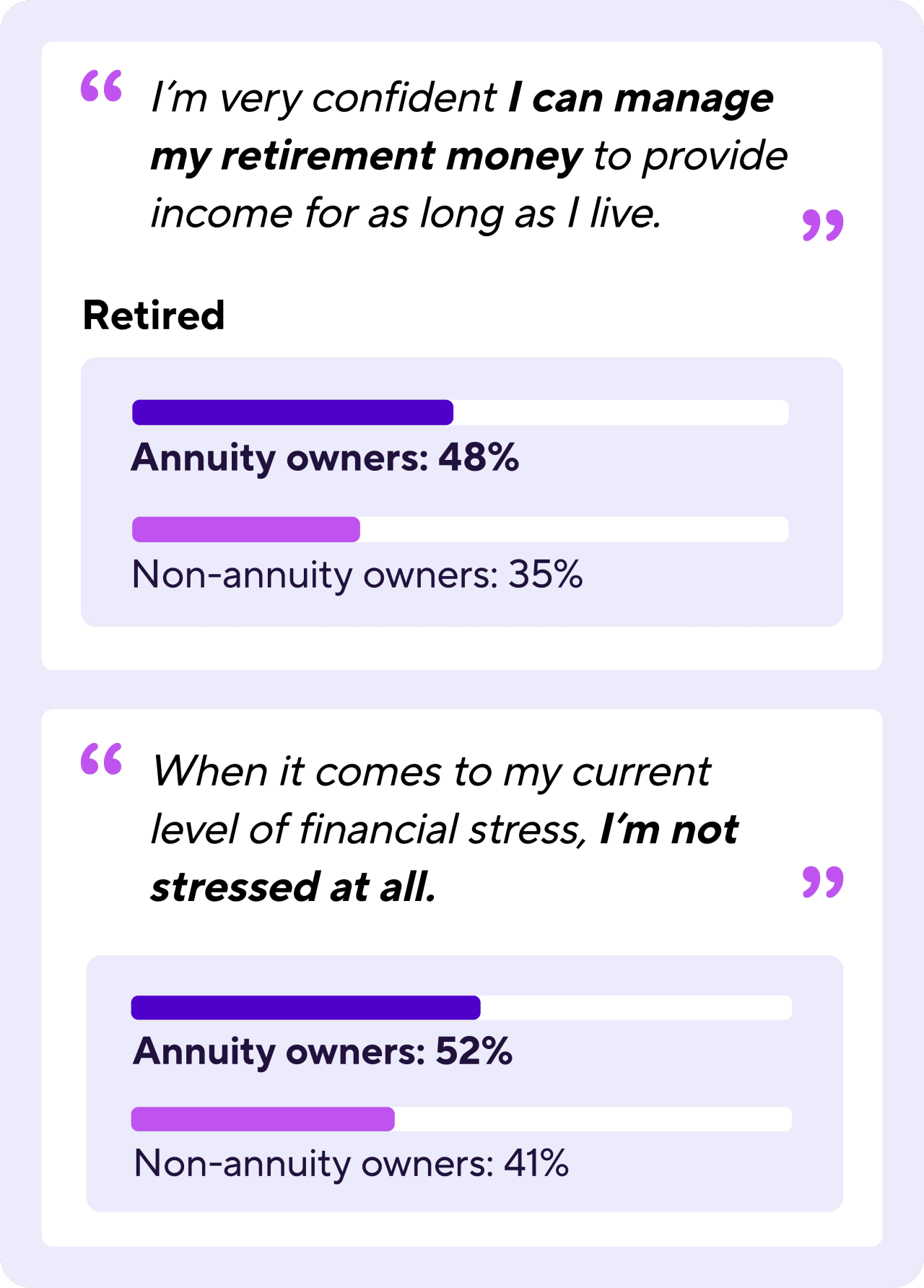
Annuity owners who were part of our study feel more confident in their ability to make their retirement savings last as long as they need it to. Considering that only 29% of Americans report being very confident they won’t outlive their savings, having a plan to convert a portion of one’s retirement savings into a sustainable income stream shouldn’t be overlooked. This can help make sure there is a foundational level of guaranteed and predicable monthly income to cover essential expenses, regardless of economic conditions, stock market shifts or other uncertainties that can affect an investment portfolio. Based on our research, annuity owners also appear to be less stressed about their finances.

Building longevity literacy into successful planning for today and tomorrow

In today’s era of increasing longevity, it may be important to rethink what retirement really can and should be. It’s not about just getting by; it’s about fully living life. This includes improving the general understanding of longevity and how people can plan for and reduce longevity risk, so they can enjoy what matters most to them — spending more time with loved ones, having more time to explore and have new experiences, and witnessing new discoveries and watching the world evolve.

Action is the bridge from planning to outcomes

At Corebridge, we believe no one achieves a financially secure future by accident — great things happen when people take action. While living and funding longer lives presents unique opportunities and challenges, these challenges can be addressed through education, thoughtful planning, greater use of lifetime income solutions, professional financial guidance, and purposeful action.

Our white paper contains a comprehensive section of action steps that can help individuals, financial professionals and employers better plan and prepare for increasing longevity. 

Download the full report 


1Findings shown, unless otherwise noted, are from Corebridge Financial's 2025 Retirement and Longevity Survey. The national online survey was conducted by Greenwald Research in September 2025 among 3,416 non-retirees and 984 retirees age 18+ with annual household income of at least $35,000. Corebridge Financial and the Longevity Project are not affiliated.

2Murphy SL, Kochanek KD, Xu JQ, Arias E, Mortality in the United States 2023, NCHS data brief no. 521, National Center for Health Statistics.

3Consumer Expenditure Survey, U.S. Department of Labor, Bureau of Labor Statistics, September 2024.


Annuities are long-term products designed for retirement and offer the opportunity for tax deferral. Annuities offer guaranteed income payments for life at no additional cost through annuitization. Alternatively, some annuities offer lifetime income through standard or optional income benefits available for an additional fee. Other restrictions and limitations apply. There is no assurance that income from an annuity will keep pace with inflation. Early withdrawals may be subject to withdrawal charges. Partial withdrawals may reduce benefits available under the contract, as well as the amount available upon a full surrender. Withdrawals of taxable amounts are subject to ordinary income tax and, if taken prior to age 59½, an additional 10% federal tax may apply. An investment in a variable annuity or registered index-linked annuity is subject to risk, including possible loss of principal. The contract, when surrendered, may be worth more or less than the investment amount. Retirement accounts, such as IRAs, can be tax-deferred regardless of whether or not they are funded with an annuity. The purchase of an annuity within a retirement account does not provide additional tax-deferred treatment of earnings. However, annuities do provide other features and benefits. Guarantees are backed by the claims-paying ability of the issuing insurance company.

This material is general in nature, was developed for educational use only, and is not intended to provide financial, legal, fiduciary, accounting or tax advice, nor is it intended to make any recommendations. Applicable laws and regulations are complex and subject to change. Please consult with your financial professional regarding your situation. For legal, accounting or tax advice consult the appropriate professional.

Corebridge Financial, Inc. and its subsidiaries provide a wide range of life insurance, retirement solutions, and other financial services. These diverse offerings include products and services that help businesses and individuals protect their assets, manage risks, and provide for retirement.

Annuities and life insurance products are issued by American General Life Insurance Company (AGL), Houston, TX except in New York, where they are issued by The United States Life Insurance Company in the City of New York (US Life). Certain annuities are issued by The Variable Annuity Life Insurance Company (VALIC), Houston, TX. Issuing companies AGL, US Life and VALIC are responsible for financial obligations of insurance products. AGL does not solicit, issue or deliver policies or contracts in the state of New York. Beginning January 1, 2026, VALIC will not solicit, issue or deliver new policies or contracts in the state of New York. Products and services may not be available in all states and product features may vary by state. Please refer to the contract.

All companies above are wholly owned subsidiaries of Corebridge Financial, Inc. Corebridge Financial and Corebridge are marketing names used by these companies.